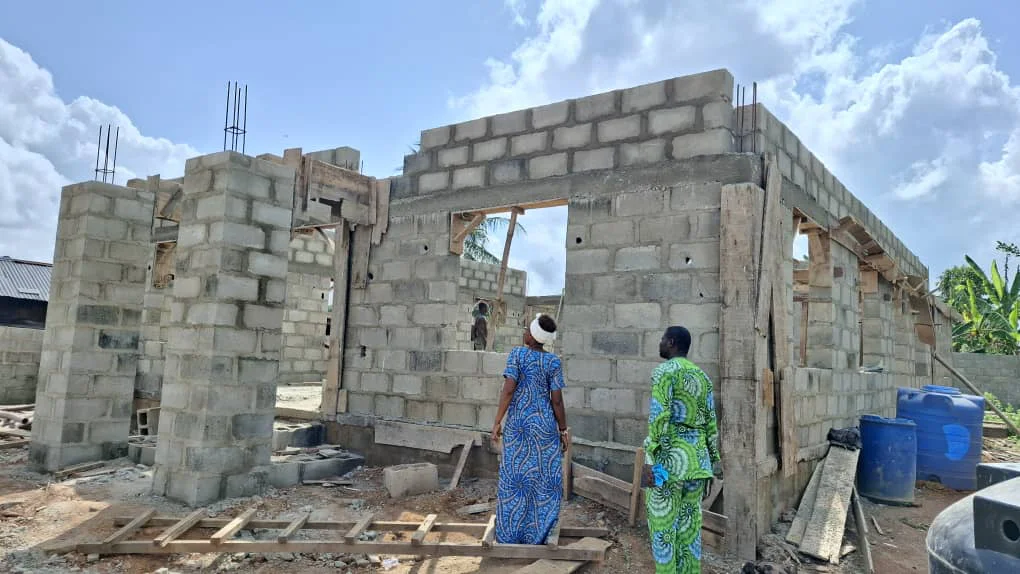
Salesian missionaries have developed the St. Joseph’s Farm, in Sagamu, thanks to donor funding from Salesian Missions. The farm is a center for training, research and production on 25 hectares of land acquired by the Salesians. Forty farmers received training in better methods of crop production to help improve production and revenue. A piggery and fishery were also constructed with this funding. The current pig barn has 20 rooms for pigs and two rooms for feed storage. A total of 29 boars and sows are at the farm, along with 135 piglets that have been purchased or reared at the farm.
Since it started, the farm has improved the farming skills of many local and small farmers, brought awareness to youth on the importance of farming, trained local people on various farming techniques, and created a cooperative of small farmers.
St. Joseph’s Farm assisted mostly poor women, young girls and unemployed youth from the local area and provided training and hands-on help with farming techniques. In addition, the project helped small farmers develop skills to manage their farms for increased productivity, self-employment and sustainability.
With a population close to 256,000, including a mix of Christians, Muslims and traditionalists, Sagamu is known for its agricultural products such as cocoa and kola nuts. The region’s rich vegetation and large masses of unoccupied or unused land attract people who develop an interest in agriculture. Yet, the region has high rates of unemployment and underemployment, as well as a low rate of formal education.
In addition, Salesian missionaries in the Imo state had the funding to help local farmers thanks to donor support from Salesian Missions. The project “Post-COVID Empowerment through the Provision of Poultry and Farm Crops for Poor Young People and Women in Nigeria” supported four poor families with their farms. These families had established small-scale farms and saw improved revenues at harvest time given the training and support received from the Salesians. Training topics included crops, organic manure, pest control and spacing of crops. Additional training was provided directly at the farm locations, and it included clearing, mapping and planting periods.